Mortez Payne
I'm Still Here- What didn't kill me made me stronger and sharperMortez Payne is Chyna's infant son and one of the two victims whose murder transforms Jensen Brick McCall's guilt into action. Though he has little independent presence in the surviving narrative, his death gives the gang's violence its most defenseless human face and becomes inseparable from Jensen's demand for justice, redemption, and escape from Syracuse.
Identity and Place in the Story
Mortez Payne is presented primarily through his relationship to Chyna: he is her son, and Jensen treats him as part of the small, improvised family formed within the gang and foster-care world. The narrative also refers to him as Montez Payne, but both names identify the same child. His vulnerability intensifies the meaning of the gang's retaliation. Chyna is accused of informing the federal authorities, while Mortez has no described role in the betrayal; nevertheless, he is targeted because he belongs to her.
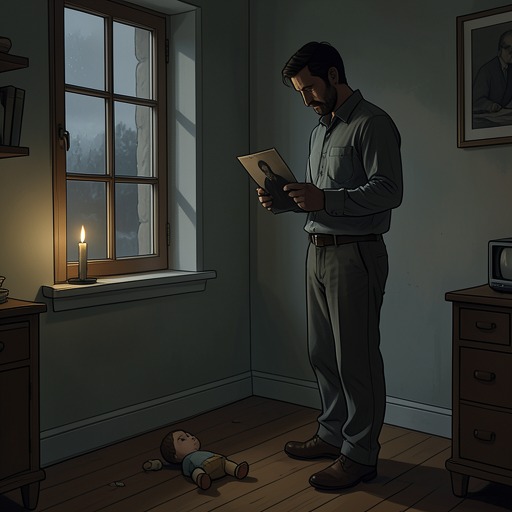
Mortez is also connected to Jensen through an intimate, ordinary gift. On the day of the murders, he holds the Transformer Jensen gave him for Christmas against his chest. That toy stands in stark contrast to the drugs, weapons, money, and criminal codes surrounding the gang. It preserves a brief image of childhood inside a world that refuses to protect children.
Murder and Immediate Aftermath
Mortez is murdered during the gang's punishment of Chyna. According to the account Jensen later gives, the gang takes Chyna to the back of the projects, brutally assaults her, shoots her son in the face, and then kills her through torture. Another later account repeats that the gang members raped Chyna, killed the baby, and treated the violence as a punishment for informing. The conflicting language around who was considered the informant does not lessen the central fact: Mortez is killed as part of collective gang retaliation, despite having no stated responsibility for the alleged betrayal.
Jensen is present after the attack and holds Mortez's cold body together with Chyna's. He closes the child's eyes, rocks both bodies, and remains unable to act while fear governs him. The following day, he goes to Detective Dartes and reports the crimes. Mortez's death therefore marks the point at which Jensen's silence becomes unbearable and his knowledge becomes evidence.
Consequences for Jensen Brick McCall
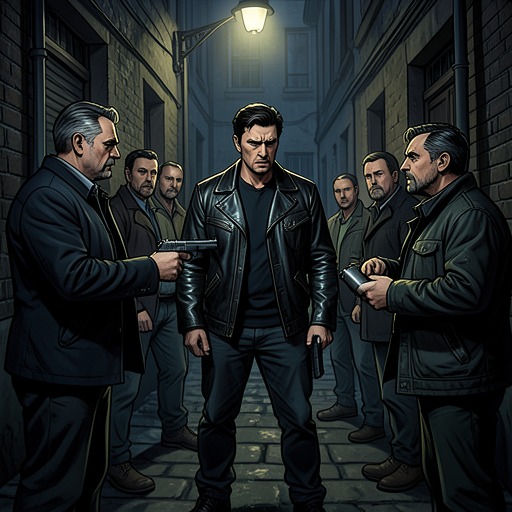
Mortez's murder is one of the reasons Jensen betrays the 357 Murder Mafia. During the early-morning federal raid, the Drug Enforcement Administration and the Federal Bureau of Investigation arrest twenty-two men, including the gang's leader, while officers seize weapons, narcotics, and money. Jensen watches from concealment and understands that his decision has destroyed the criminal family that once functioned as his home. He describes the betrayal as a choice between his freedom and theirs, but he also frames it as an attempt to honor Mortez, Chyna, and Grace McCall.
The child's death deepens Jensen's survivor's guilt. He says that Mortez and Chyna were punished for his act of treason, even though the gang itself carried out the killings. His continuing mission is to find the person he calls his murderer and to force an explanation for the abandonment that shaped his own birth. Mortez's death thus joins two forms of unresolved loss in Jensen's mind: the murder he failed to prevent and the maternal absence he has never understood.
Narrative Significance
Mortez Payne functions as a symbol of innocence destroyed by the gang's code. The gang's rhetoric treats betrayal, sex, and association with an enemy as grounds for death, while the child is reduced to collateral damage within that logic. His Transformer, held against his body after death, makes the violence impossible to regard as merely a conflict among adults. It exposes the gang's supposed rules as a system that consumes even those who cannot choose sides.
His murder also gives Jensen's later movement a moral direction. The raid is not presented simply as law enforcement succeeding against narcotics sales; it is the consequence of a testimony rooted in grief. Jensen leaves behind the gang, carries his guilt, and pursues truth partly so that Mortez will not disappear into an unnamed casualty. The child remains absent from subsequent choices, but his death continues to govern them: it turns Jensen's fear into testimony, his testimony into flight, and his flight into an attempted act of redemption.